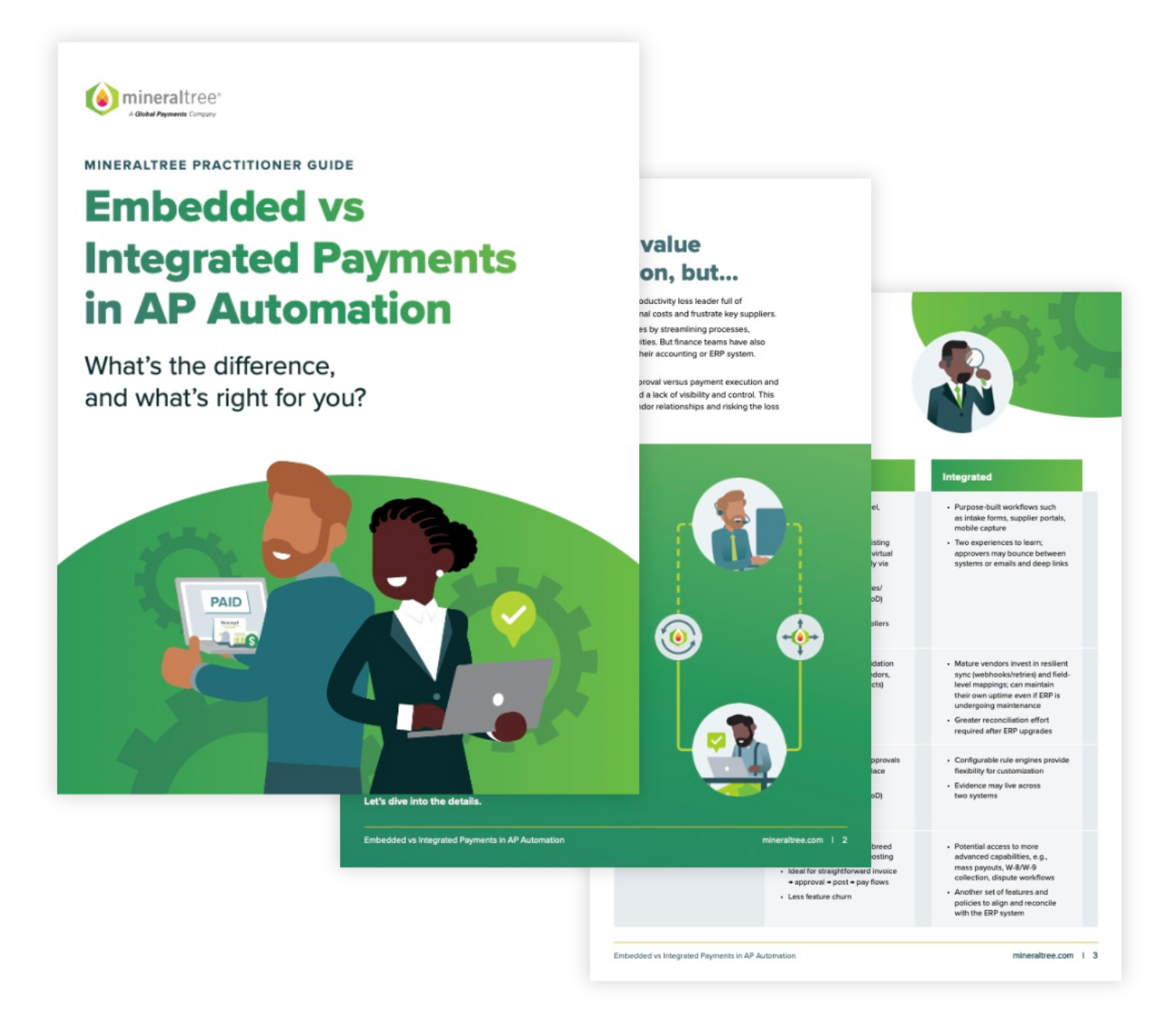
A look at key differences, AP process impact, and choosing the right approach for your organization
For many finance teams, accounts payable (AP) is a necessary evil — a productivity loss leader full of inefficient manual requirements that hamper efficiency, increase operational costs and frustrate key suppliers.
Modern AP automation has helped organizations address these challenges by streamlining processes, reducing errors and freeing up finance staff to focus on higher-value activities.
Many businesses have separate systems for invoicing processing and approval versus payment execution and reconciliation. That can create a disconnect in the end-to-end process and a lack of visibility and control. This makes it difficult to ensure timely vendor payments, hurting important vendor relationships and risking the loss of valuable supplier discounts.
How can you close the gap? Download this guide now to learn:
- The key differences between embedded and integrated payment functionality
- How each path can impact your organizations and AP processes when it comes to UX and adoption, reliability, compliance, and implementation
- The best approach for your organization